Lenovo’s expanded high-performance computing infrastructure has cut
3D engine CFD simulation times by 50% and structural analysis times by 30%,
accelerating the development of Ducati Corse’s all-new engine and aerodynamics package
The new 2027 MotoGP regulations mark the biggest technical reset in MotoGP in over a decade. With the introduction of 850cc engines, reduced aerodynamics, no ride-height devices allowed, the introduction of 100% sustainable fuel, and a new tire supplier, Ducati Corse redesigned the Desmosedici GP bike from the ground up. Every major element of the bike, from engine to aerodynamics requires a fresh approach. At the same time, Ducati Corse needed to continue developing its 2026 bike to remain competitive in the fight for the 2026 MotoGP World Championship. This created the complex challenge of running two very different development programs simultaneously.
To meet this challenge, Ducati Corse significantly expanded its Lenovo High-Performance Computing (HPC) infrastructure, which now delivers over 108 TFLOPS of combined theoretical double-precision computing performance. Compared to the previous generation of compute nodes, the latest expansion roughly doubled the available memory and added around 48% more processing power. This increased capacity enables Ducati’s engineers to perform more complex engine and aerodynamics simulations, evaluate a wider range of design ideas, and significantly reduce the time required to transform analytical results into solutions ready for on-track testing.
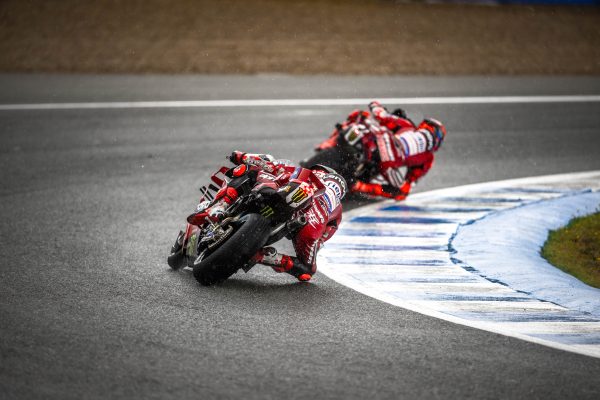 Lenovo’s hardware has played a critical role in the design phase of the 2027 Desmosedici GP. With the new regulations requiring a completely redesigned engine, it was vital for Ducati Corse to have the computational power needed to optimize key components like the intake and thermal systems, connecting rods, and the crankshaft.
By halving computation times for 3D engine CFD simulations and reducing them by 30% for structural analysis, Ducati Corse has been able to explore more design iterations virtually before manufacturing physical components. Only the most promising designs progressed to the prototype stage, significantly reducing development time and manufacturing costs, while increasing accuracy and reliability.
With on-track testing limited by MotoGP’s concessions system, simulation and predictive engineering also play a key role in the bike’s aerodynamic development. The enhanced HPC infrastructure enables Ducati engineers to run increasingly sophisticated – and therefore more computationally demanding – simulation models, providing a more accurate representation of real-world conditions and a deeper understanding of the impact of aerodynamics on overall vehicle performance.
By enabling Ducati Corse to develop the current and next-generation bikes in parallel while significantly accelerating complex engineering analyses and simulations, Lenovo’s expanded HPC infrastructure is helping the team prepare for one of the biggest technical changes in modern MotoGP.


